What is free website hosting? Everything you need to know

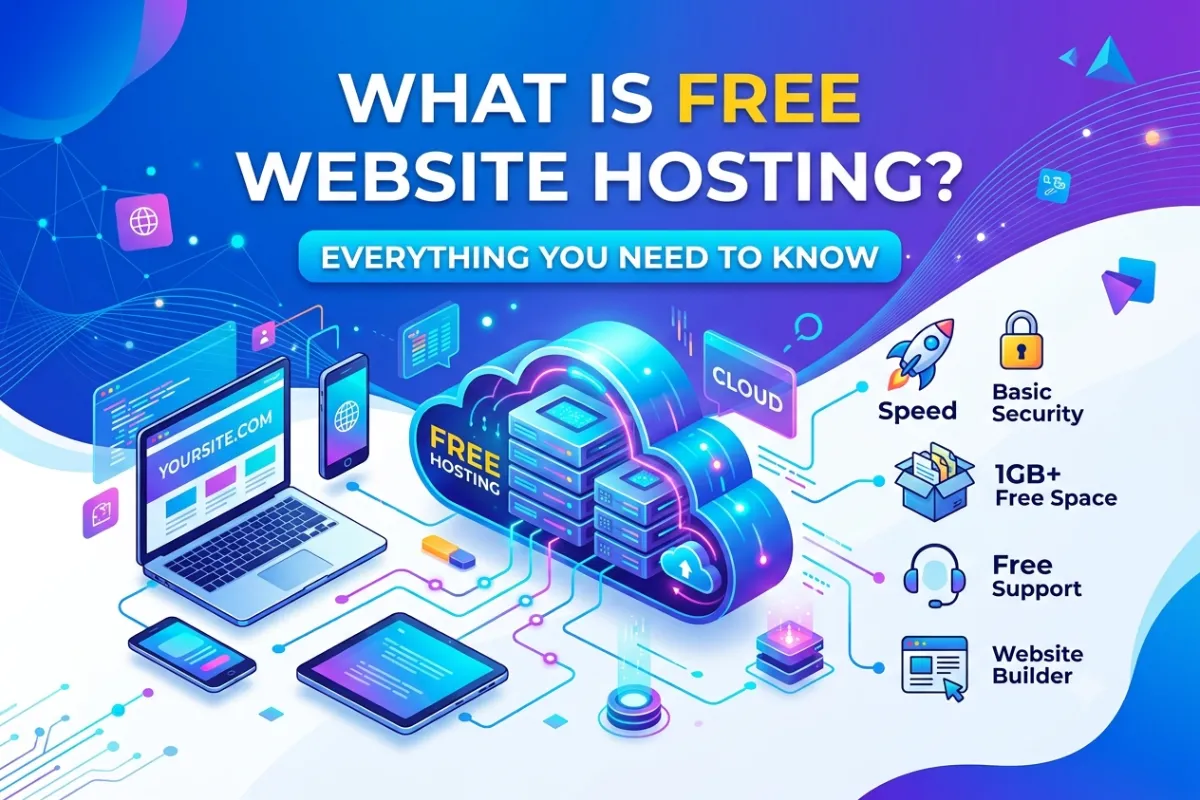
Do you want to create a website but don’t know where to start? Or perhaps you’ve heard of free hosting and want to understand if it really works? In this article, we explain everything you need to know about free website hosting : how it works, its benefits, limitations, and when this solution is—or isn’t—worth it.
What is free website hosting?
Free website hosting is a service that allows you to publish a website on the internet without paying for it. As with any hosting service, the company provides servers (computers connected to the internet 24 hours a day) where your website files are stored and accessible to anyone in the world.
The difference compared to paid plans is that, in the free versions, the available resources are quite limited — such as disk space, bandwidth, and advanced features.
How does free web hosting work?
The basic operation of free website hosting is similar to that of any web server . When someone types your website address, the server sends the files to the visitor’s browser. However, in the free versions, there are some important differences:
Limited storage space
Free plans typically offer only a few megabytes or gigabytes of storage — enough for simple websites, but insufficient for e-commerce sites, content portals, or more robust systems.
Shared resources
You share the same server with hundreds or even thousands of other users. This means that if another website on the same server experiences a surge in traffic, your website’s performance may suffer as well.
Simplified management panel
Most free hosting providers offer a very basic control panel, without access to advanced features such as a full cPanel , unlimited databases, or custom server configurations.
How companies profit by offering free hosting.
If the service is free, how does the web hosting company survive? There are a few common business models:
- Displaying ads on your website without your permission or revenue sharing.
- Freemium strategy: the free plan is bait to eventually get you to subscribe to a paid plan.
- Collection and use of platform usage data
- Selling additional services such as domains, SSL, and professional email.
What are the advantages of free website hosting?
Despite the limitations, there are situations where free website hosting is a smart choice. Check out the main advantages:
No initial investment required.
The main attraction is obvious: zero cost. For those who are starting out, still testing an idea, or simply don’t have a budget available, this may be the only viable option.
Ideal for testing and learning.
Beginner developers and technology students can use free hosting to practice, learn server configurations, and test projects without financial risk.
Easy setup
Many free services were developed specifically with users without technical knowledge in mind. Simple interfaces and setup wizards make the process accessible to anyone.
A good option for temporary projects.
Need a website for just a few weeks for an event, campaign, or academic project? Free hosting does the job perfectly without generating unnecessary costs.
What are the disadvantages of free hosting?
The limitations of free hosting go far beyond disk space. It’s essential to understand them before making a decision:
Lower performance
Websites hosted on free services tend to load more slowly, especially during peak hours. This directly affects the user experience and, consequently, your website’s performance.
Resource limitations
Limited storage, monthly bandwidth limits, restrictions on the number of databases and professional emails are common drawbacks of free plans.
Poor scalability
If your website grows, you won’t be able to expand the features on the free plan. You’ll need to migrate to paid hosting — and that process isn’t always straightforward.
Advertisements on the website
Many free platforms insert banners and advertisements on your website to monetize the service. This detracts from the professional appearance and can drive visitors away.
Lower level of security
Free hosting providers rarely offer high-quality free SSL certificates, automatic backups, DDoS attack protection, and advanced firewalls. This leaves your website more vulnerable to hacking and data loss.
Limited technical support
When something goes wrong, you usually rely on community forums or generic tutorials. 24/7 expert support is exclusive to paid plans.
Free or paid website hosting: what’s the difference?
To facilitate comparison, see the table below with the main criteria evaluated:
| Criterion | Free Accommodation | Paid Accommodation |
|---|---|---|
| Performance | Limited | High |
| Storage | Reduced | Wide |
| Security | Basic | Advanced |
| Support | Limited / Forum | 24/7 specialized |
| Custom domain | Usually not | Try |
| Scalability | Low | High |
| Advertisements | Common presence | No ads |
| Cost | Free | Starting from R$10/month |
It’s clear that paid hosting offers a much more complete structure for those who want a professional, secure website with growth potential.
When is it worthwhile to use free web hosting?
Free web hosting has its place. Here are some scenarios where it makes sense:
Personal blogs
If you want to share texts, recipes, or travel experiences with friends and family, without commercial ambitions, free hosting is perfectly adequate.
Portfolios
Students and early-career professionals can create a basic online portfolio to showcase their work without any upfront costs—especially while they are still building their reputation.
Academic projects
College assignments, digital monographs, or research projects that require an online presence for a specific period are ideal cases for using free web hosting.
Testing and development sites
Developers who need to test an application, validate code, or demonstrate a prototype to a client can use free hosting as a staging environment.
When should you avoid free hosting?
There are situations where insisting on the free plan can be costly — not in money, but in missed opportunities:
Online stores
E-commerce businesses need speed, secure payment processing (PCI compliance), a reliable SSL certificate, and high availability. None of these requirements are adequately met by free hosting services.
Business websites
A website with a free subdomain (like company.hoster.com) conveys little credibility to clients and partners. Investing in professional hosting and a custom domain is essential for any serious business.
Projects that rely on SEO
Loading speed, custom domain, SSL certificate, and adequate technical infrastructure are key factors for search engine ranking. Free hosting compromises all of these aspects.
Websites that require high availability.
If your website is down for a few hours, that represents a loss of customers and revenue. Free plans don’t guarantee a reliable SLA (minimum uptime).
Main types of free hosting available on the market.
There are different types of free hosting. Understand each of them:
Hosting with free subdomain
The company offers server space, but your website address will be myname.company.com instead of myname.com. Examples: InfinityFree, 000WebHost (discontinued), AwardSpace.
Freemium hosting
The service has a free plan with basic features and paid plans with expanded features. The idea is that you try it out and, if you like it, upgrade. Examples: Wix , Weebly, WordPress.com.
Website creation platforms with hosting included.
Tools like WordPress.com, Wix , and Blogger offer website creation and hosting together , with free plans that include a subdomain and limited features. They are ideal for complete beginners who don’t want to deal with technical configurations.
How to choose a good free web hosting service?
If you’ve decided to opt for free web hosting , consider the following criteria to make the best choice:
Check storage limits
Even with free hosting plans, look for options that offer at least 500 MB to 1 GB of disk space. This ensures you won’t run out of space quickly.
Assess security features
Check if the platform offers a free SSL certificate (HTTPS). Without it, modern browsers may display “not secure” alerts to your visitors.
Analyze the possibility of an upgrade.
Choose a hosting plan that allows you to easily migrate to a paid plan when your project grows. This way, you won’t have to rebuild the website from scratch.
Check the company’s reputation.
Before entrusting your data to any platform, research reviews from other users, check how long the company has been in business, and whether it has active support.
Frequently asked questions about free website hosting (FAQ)
Is free web hosting safe?
It depends on the platform. In general, free hosting offers a lower level of security than paid hosting. For personal and test websites, this may be sufficient. However, for websites that store user data or conduct financial transactions, we strongly recommend opting for paid hosting with SSL support and automatic backups.
Can I use my own domain?
Most free hosting providers don’t allow you to link a custom domain. You’ll be restricted to a subdomain like yoursite.platform.com. Some platforms allow the use of your own domain, but only on paid plans.
Can I make money with a website hosted for free?
Technically yes, but with significant limitations. Many free platforms prohibit advertising or commercial use in their terms of service. Furthermore, the lack of a custom domain and slower performance hinder efficient monetization.
Does free hosting help with SEO?
Not significantly. The lack of a custom domain, slower loading times, and the absence of SSL are factors that negatively impact ranking in search engines like Google. If SEO is a priority, investing in paid hosting makes all the difference. Learn more: SEO Fundamentals Guide
Can I migrate from free web hosting to paid hosting later?
Yes, and that’s a common strategy. Start with a free plan to learn and test, and when your project is more mature, migrate to a paid plan. Check in advance if the free web hosting you choose facilitates this migration process or if there are any restrictions.
Conclusion
Free website hosting is an excellent entry point for those taking their first steps into the digital world. It allows you to create a website without initial investment , learn by doing, and validate ideas before committing financial resources.
However, it’s important to be clear about its limitations: reduced performance, poor security, lack of a custom domain, and limited resources make free website hosting unsuitable for professional projects, online stores, or any website that needs to grow.
The final tip is simple: use free web hosting as a starting point, not as a destination. Assess the real needs of your project, compare the available options, and when you’re ready to take the next step, choose a paid hosting plan that offers performance, security, and support that matches your ambitions.