How Much Does Web Hosting Cost? A Complete Guide

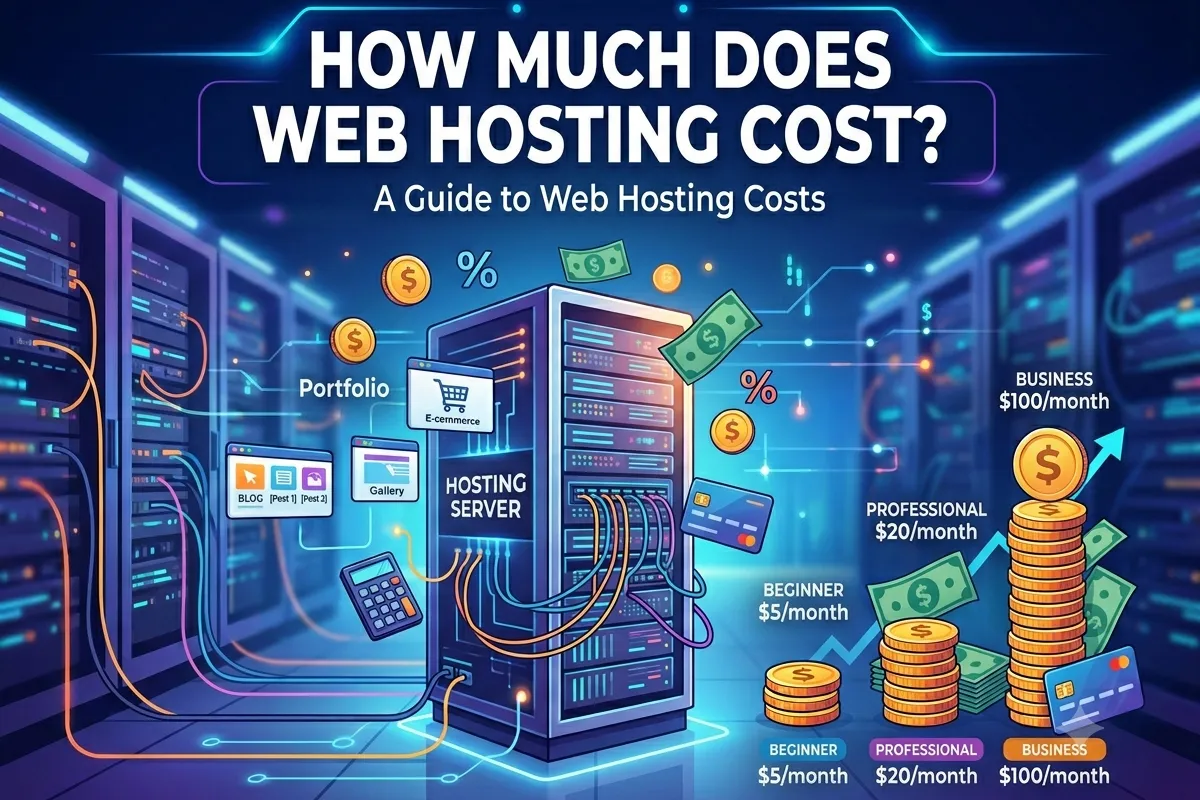
If you are thinking about starting an online project—whether it’s a personal website, a blog, or an online store—you first need to know how much web hosting costs, what factors influence the price, and how to choose the best hosting plan for your project. If you don’t yet know exactly what web hosting is, we recommend starting there before comparing prices and plans.
How Much Does Web Hosting Cost in 2026?
One of the first questions anyone asks before building a website is: how much will hosting actually cost me? The honest answer is: it depends. Web hosting prices vary widely based on the type of plan, the features included, and the provider you choose. If you’re not sure what web hosting actually is, we recommend starting there before diving into pricing.
Generally speaking, you can find plans starting under $2/month all the way up to enterprise solutions costing $500 or more per month. The key is understanding what each type of hosting offers — and what your project really needs.
Here’s a detailed breakdown of each hosting type and its price range. You can also browse all types of web hosting for a side-by-side comparison.
You also like:
What is Web Hosting? How to Choose the Best
What is Shared Hosting and How Does it Work? Pros And Cons
What is VPS Hosting: Complete Guide to Virtual Private Servers
What is a dedicated server? How to choose the best
Shared Hosting Price Range
Shared hosting is the most affordable option on the market. In this model, multiple websites share the same server resources — CPU, memory, and storage — which keeps costs low for everyone.
Price range: $1 to $15 per month.
It’s ideal for beginners, personal blogs, portfolios, and small business websites with moderate traffic. Most providers include a free domain for the first year, a free SSL certificate, and a beginner-friendly control panel such as cPanel.
VPS Hosting Cost
A Virtual Private Server (VPS) gives you dedicated resources within a shared physical server. Unlike shared hosting, your slice of CPU, RAM, and storage is reserved exclusively for your site.
Price range: $20 to $100 per month.
VPS is recommended for growing online stores, websites with increasing traffic, or projects that need more control over their server environment — such as the ability to install custom software or configure security rules.
Cloud Hosting Price
Cloud hosting distributes your website across multiple interconnected servers. This means greater reliability — if one server goes down, another picks up instantly — plus easy scalability when traffic spikes.
Price range: $30 to $200 per month (many cloud plans charge based on actual resource usage).
Cloud hosting is a smart choice for e-commerce stores, content portals, SaaS applications, and any project that needs to handle unpredictable traffic volumes.
Dedicated Server Cost
With a dedicated server, the entire physical machine is yours. No other clients share your resources, delivering maximum performance, security, and full administrative control.
Price range: $100 to $500+ per month.
Dedicated servers are built for large portals, high-traffic platforms, financial applications, and enterprise systems that demand near-perfect uptime and consistent performance.
Managed WordPress Hosting: Is It Worth It?
Managed WordPress hosting is an environment specifically optimized for WordPress sites. The provider handles updates, backups, security, and performance tuning so you can focus entirely on content.
Price range: $15 to $150 per month.
It’s worth the investment for anyone who relies on WordPress as their primary platform and wants a hands-off, high-performance setup without dealing with technical maintenance.
What Factors Influence the Price of Web Hosting?
The cost of a hosting plan isn’t determined by disk space alone. A range of features and infrastructure choices affect the final price. Understanding these factors helps you compare plans more intelligently — and avoid paying for things you don’t need.
Storage Space
The more disk space a plan offers, the higher its cost tends to be. Simple websites work fine with 5–10 GB of SSD storage. Online stores with large product catalogs, images, and videos may require significantly more.
Traffic Capacity
Budget plans often include traffic or CPU usage limits. When your website receives too many simultaneous visitors, the server can become overloaded — causing slowdowns or downtime. Higher-tier plans handle traffic spikes without breaking a sweat.
Performance Infrastructure
Features like NVMe SSD storage, CDN (Content Delivery Network) integration, advanced caching, and HTTP/3 support directly impact your site’s speed — and its price tag.
SSL Certificate Included
An SSL certificate encrypts the connection between your visitors and your website (the padlock in the browser). Most plans include a free SSL via Let’s Encrypt. Premium certificates with Extended Validation (EV SSL) carry an additional annual cost. According to Google Search Central, HTTPS is a confirmed ranking signal — making SSL essential for both security and SEO from day one.
Automatic Backups
Plans that include daily or weekly automatic backups offer much stronger data protection. This feature may be bundled into the plan price or charged as an add-on — always check before you buy.
Technical Support
Hosting providers offering 24/7 support via live chat, phone, or ticketing systems typically charge more. But that investment pays off the moment you face a critical issue that needs immediate resolution.
Security Features
DDoS protection, web application firewalls, malware scanning, real-time monitoring, and brute-force protection are all value-added security features that increase plan pricing — but also significantly reduce risk.
How Much Does It Cost to Maintain a Website Beyond Hosting?
Hosting is just one piece of the puzzle. To budget accurately for your website, you need to factor in every recurring and one-time cost involved. Here’s a full breakdown:
Domain Name Registration
Your domain is your website’s address on the internet (e.g., yoursite.com). Registration costs vary by extension: .com domains typically run $10–$20 per year, while newer or premium TLDs (.io, .co, .ai) can cost $30–$60+ annually.
Premium SSL Certificate
While free SSL is sufficient for most projects, e-commerce platforms and financial services may need certificates with Organization Validation (OV) or Extended Validation (EV), which cost between $50 and $500 per year depending on the provider and level of trust assurance.
Website Design and Development
The cost of building and customizing a site varies enormously. A simple WordPress site with a free theme may cost nothing beyond your time. A professionally developed website by a freelancer or agency can range from $500 to $20,000+, depending on complexity, custom features, and integrations.
Paid Plugins and Tools
Premium plugins for SEO (e.g., Yoast, Rank Math Pro), e-commerce (WooCommerce extensions), security (Wordfence Premium), and performance (WP Rocket) can add $50 to $300 or more per year to your total running costs.
Ongoing Maintenance
Keeping your site updated, secure, and functioning properly takes time — or money. Monthly website maintenance services from freelancers or agencies typically range from $50 to $500/month depending on the scope of work.
Read: How to Create a WordPress Website – A Step-by-Step Guide for Beginners
Which Type of Hosting Is Right for Each Project?
Matching the right hosting type to your project prevents you from overpaying — or from under-investing and ending up with a slow, unreliable site. Here’s a quick guide by project type:
Blogs and Informational Websites
For personal blogs, portfolios, landing pages, and small business sites, shared hosting is more than enough. Plans in the $3–$12/month range handle this type of project well, especially if the site runs on WordPress.
Online Stores (E-commerce)
E-commerce websites need more security, reliability, and processing power. A VPS plan or an advanced shared hosting tier is the minimum recommended starting point. Budget at least $20–$40/month for a store handling real transactions.
News and Media Portals
Content-heavy sites with frequent publishing schedules and unpredictable traffic spikes benefit from cloud hosting or VPS. Scalability is key: you need to handle a viral article without taking your site offline.
High-Traffic Platforms
Marketplaces, SaaS platforms, and large media portals need dedicated servers or enterprise cloud solutions. Expect to invest $100–$500+/month, plus infrastructure management costs.
Affiliate Marketing Sites
Affiliate sites typically start on shared hosting when organic traffic is still building. As SEO efforts pay off and traffic grows, upgrading to VPS or cloud becomes necessary to maintain fast load times — which directly impacts both rankings and conversion rates.
Is Cheap Web Hosting Worth It?
This is one of the most debated questions in the web hosting world. The answer depends entirely on your project’s stage and requirements.
When Budget Hosting Is Enough
If you’re testing a new idea, launching a personal blog, building a portfolio, or creating a simple brochure site for a local business, an affordable shared hosting plan is perfectly adequate. The important thing is choosing a reliable provider — even at the entry level.
Signs You’ve Outgrown Your Current Plan
- Your site consistently loads slowly, especially during peak hours.
- You’re receiving warnings about exceeding CPU or bandwidth limits.
- Support tickets take days to resolve, or issues keep recurring.
- Your site experiences frequent downtime or unexpected outages.
- Google PageSpeed Insights flags server response time (TTFB) as a problem.
The Real Risks of Choosing Only on Price
Ultra-cheap hosting plans can compromise your site’s security, performance, and uptime. A slow or unavailable website drives visitors away, damages your search rankings, and in the case of online stores, directly costs you sales.
According to the Web Almanac by HTTP Archive, page load speed is one of the most critical factors for user retention and conversion rates — reinforcing why cutting corners on hosting can cost far more than the savings you gain.
How to Save Money on Web Hosting Without Sacrificing Quality
There are smart, legitimate ways to reduce your hosting costs without compromising on reliability or performance. Here’s how:
Opt for Annual Billing
Most web hosting providers offer significant discounts — often 30–50% — when you pay annually instead of monthly. If you’re confident in your project, locking in an annual plan is almost always the smarter financial choice.
Take Advantage of Introductory Offers
Hosting companies frequently offer steep promotional rates for the first billing cycle. These can be great deals — just make sure you know the renewal price before committing, so you’re not caught off guard when your plan renews.
Compare Features, Not Just Price
Two plans at the same price point can offer dramatically different feature sets. Always compare: storage, number of websites allowed, email accounts, included SSL, backup frequency, and support quality. Check our best web hosting comparison guide to see top providers evaluated side-by-side based on real user experiences.
Choose a Scalable Plan
Start with a plan that fits your current needs — but make sure your provider makes it easy to upgrade as your site grows. Migrating to a new hosting provider is time-consuming and risky. Scalability within the same provider keeps things smooth.
How Much Does Web Hosting Cost on Average? (Quick Reference)
Here’s a summary table comparing the five main hosting types, their average monthly price ranges, and who each is best suited for:
| Hosting Type | Average Monthly Price (USD) | Best For |
|---|---|---|
| Shared Hosting | $1 – $15/month | Blogs, personal sites, beginners |
| VPS Hosting | $20 – $100/month | Growing stores, medium-traffic sites |
| Cloud Hosting | $30 – $200/month | Variable traffic, e-commerce |
| Dedicated Server | $100 – $500+/month | Large portals, enterprise platforms |
| Managed WordPress | $15 – $150/month | WordPress sites needing full support |
Prices vary between providers and regions. Always compare plans based on features and total value — not just the monthly fee.
Frequently Asked Questions About Web Hosting Costs
Can I get free web hosting?
Yes — free hosting options exist, but they come with serious limitations: restricted storage, forced ads on your site, no custom domain, limited support, and poor reliability. For any professional or commercial project, paid hosting is always the better investment. Learn more about free hosting options and their trade-offs in our dedicated guide.
How much does a website cost per month?
When you add up hosting, domain renewal, and essential tools, a basic website typically costs between $5 and $30 per month. More complex projects — such as WooCommerce stores with premium plugins or sites requiring professional maintenance — can exceed $100–$300/month.
Is web hosting the same as a domain name?
No. Your domain is your website’s address (e.g., yoursite.com), while hosting is the server where your website’s files are stored. Both are separate services that need to work together. Many providers bundle them together, but they’re distinct products with separate billing cycles.
What is the best hosting for beginners?
For beginners, shared hosting is the go-to starting point. It’s affordable, beginner-friendly, and sufficient for new websites with moderate traffic. Look for providers with one-click WordPress installation, intuitive dashboards (like cPanel), and 24/7 support. Browse our top hosting recommendations to find the best-rated options for new website owners.
How much does it cost to run a professional website per year?
Here’s a realistic annual cost estimate for a professional website: hosting ($60–$1,800/year), domain ($10–$60/year), premium plugins and tools ($50–$300/year), and maintenance services ($0–$3,600/year if outsourced). All in, a professional website can cost anywhere from $120 to $6,000+ per year depending on the scope and complexity of the project.
Conclusion: Choose the Right Hosting for Your Budget and Goals
Understanding how much web hosting costs is the first step toward making a smart investment in your online presence. As we’ve seen, prices range from just a few dollars a month for basic shared hosting to several hundred dollars for enterprise-grade dedicated servers.
The goal isn’t to find the cheapest plan — it’s to find the plan that delivers the best value for your specific project at its current stage. Evaluate your needs, compare what each provider includes in their plans, and pay close attention to performance, security, and support quality.
If you’re just getting started, a reliable shared hosting plan is the perfect entry point. As your site grows, upgrading to VPS or cloud hosting becomes a natural — and worthwhile — next step.
Ready to choose? Visit our complete web hosting comparison guide for 2026 and find the best provider for your needs based on real performance data and user reviews.